
Detoxifying Tahini Chicken Salad
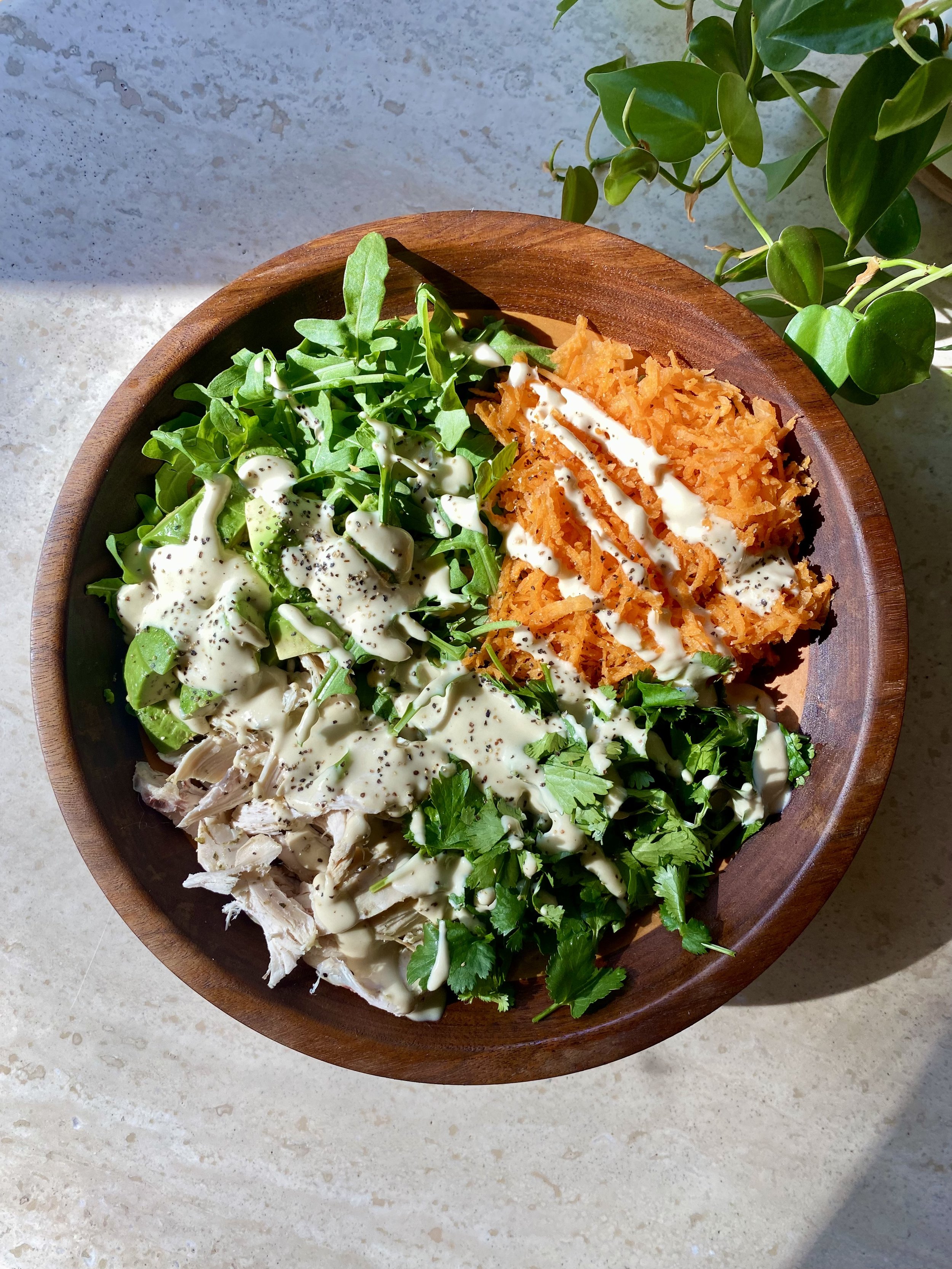
INGREDIENTS
Detoxifying Tahini Chicken Salad
Serves 1, as main
2 cups arugula
1/4 c cilantro, fresh
1/2 c shredded chicken (or preferred portion)
1 large carrot, grated
1/3 or 1/2 avocado, diced
Salt and pepper, to taste
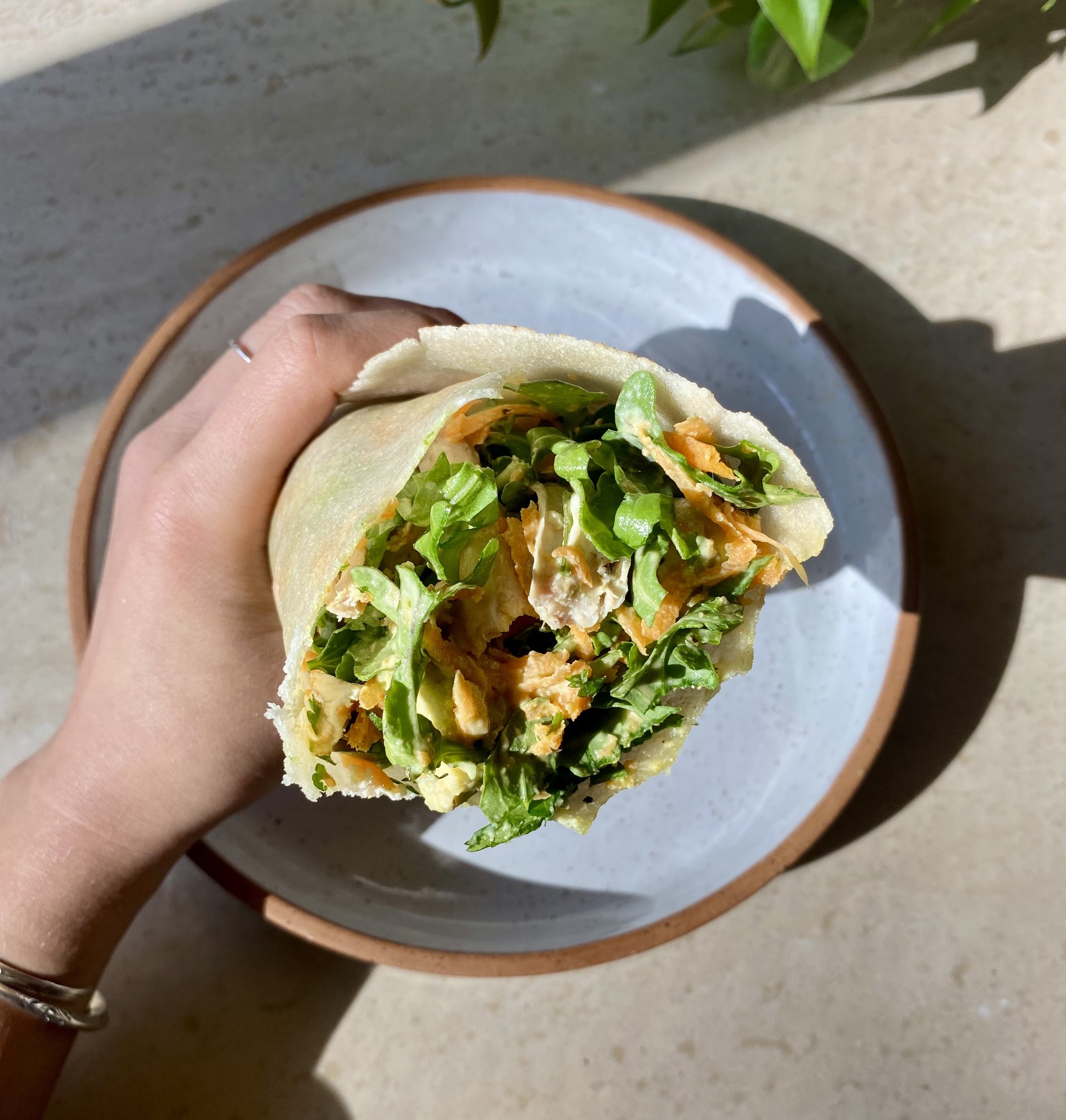
2 gluten free tortillas, to serve (optional)
For the dressing
Makes extra!
1/2 c tahini
2-3 tbs apple cider vinegar, to taste
3 tbs olive oil
2 tsp pure maple syrup (to taste)
3 tbs filtered water, to thin
2 pinches quality salt (like pink himalayan)
METHOD
For the dressing: Add all ingredients to a jar and shake vigorously until combined (make sure the lid is tight.) If it’s too thick, add a little water to thin it out — this will depend on how thick your tahini is, I like the flavor of Kavala's.
For the salad: Combine all ingredients in a large bowl and add as much dressing as you would like, adding enough for the salad to be nice and moist. Stir to evenly coat. Add salt and pepper to taste.
You can eat it just like this, or you can throw it into a tortilla for a chicken salad wrap (I like cassava burrito size tortillas from Siete Foods). Tip: heat the tortilla to make it more malleable. I've also used smaller tortillas and wrapped them like soft tacos, and toasted the tortillas before crumbling it into the salad (so good).
Enjoy!
DETOXIFICATION BENEFITS
We’re exposed to hundreds of toxins every day — in our food, our homes, our body products, and the environment. Our bodies even create some toxins naturally as byproducts of everyday processes.
Thankfully, we’re designed to detoxify, but with the level of exposure we face today, our natural system needs a little extra support. That’s where this salad comes in, it’s packed with detoxifying arugula, cilantro, and a good dose of protein (more on that in a moment).
In simple terms, liver detoxification happens in three phases. In Phase I, toxins are released into the bloodstream to prepare for Phase II, when the liver binds them with specific biochemicals so they can be eliminated through bile, urine, and stool. Phase III is the actual transport process, and that requires a well-functioning digestive system.
Problems often arise when Phase I outpaces Phase II. When that happens, toxins start recirculating in the body instead of being cleared out. Phase I also generates free radicals, which need antioxidants to prevent damage. So if Phase II can’t keep up, the imbalance puts extra stress on your system.
Each phase of detoxification depends on certain nutrients. Most people think of vegetables and herbs when they hear “detox,” but protein is just as essential. During Phase II, protein helps pull toxins out of the body, and its amino acids support the production of antioxidants like glutathione, a key player in proper detoxification.
I’ll dive deeper into the science of detoxification in a future post, but for now, remember this: detoxing isn’t just about greens and herbs. Protein matters too! So skip the extreme juice cleanses — if you’ve heard of someone feeling sick after one, this imbalance could be the reason why.